
MOVEmber - How Your Physical Health Affects Your Mental Health

Posted By Sam Wheeldon on November 25, 2026

Why is Ireland’s mental health so far behind other European countries? (1) And what actions can we take to improve both young people's and our own mental health?

This November marks the 23rd year of the men’s mental health awareness event “Movember”. In recent years there has been an increased focus by various charities on incorporating movement during this event, including through physical or fitness-based challenges such as the “60km challenge” which, representing the 60 mens' lives lost to suicide globally every hour, encourages participants to walk or run 60 kilometres over the course of the month.
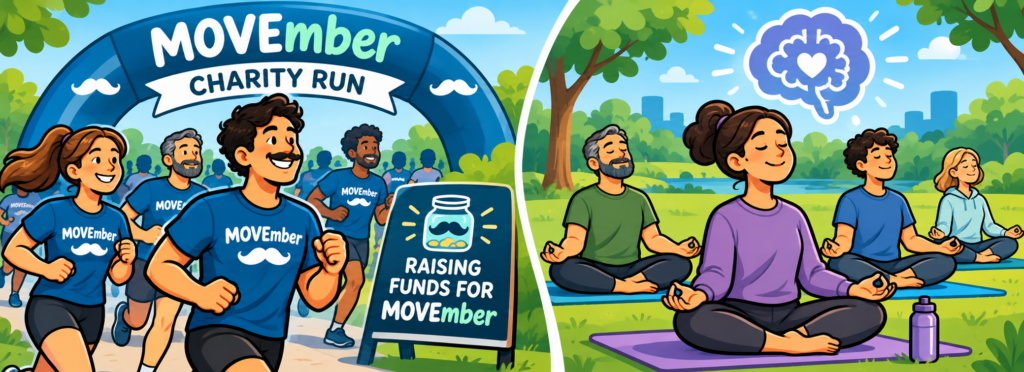
Over the last few years Ireland has seen greater adoption of these Movember related fundraisers, especially from sports clubs and the GAA, perhaps partly in response to the concerning rates of poor mental health among young people which continues to rise (2). The increased involvement of movement, sport and exercise in the fight against mental health conditions might just be a key turning point for Ireland however.

The connection between physical activity and mental health is long established, and while it’s commonly understood that physical health can have an effect on your mental health, the current science shows just how profound that effect can be and how early in life it can make an impact.

Mental Health in Ireland

When compared to other EU countries Ireland ranks joint 3rd highest for prevalence of reported mental health disorders out of 26 nations (1). One of the most vulnerable groups with regards to poor mental health are those between the ages of 12 and 25, an age range in which the vast majority of mental health conditions first appear or develop. In fact, one global study discovered that 34.6% of all mental health conditions emerge by age 14 and 62.5% by age 25 (3). 

While that study included a large spectrum of mental conditions in its analysis, ranging from generalised anxiety disorder to autism spectrum disorder, the mental health landscape in Ireland’s younger population is perhaps best captured by a recent study conducted by researchers at the Royal College of Surgeons in Ireland (RCSI). This research found that 29% of secondary-school adolescents described their mental health as "bad" or "very bad” (4).

The Central Statistics Office for Ireland has also reported that those aged 15-24 in Ireland were 6x more likely to report their mental health as bad compared to those aged 65-74 (5). 
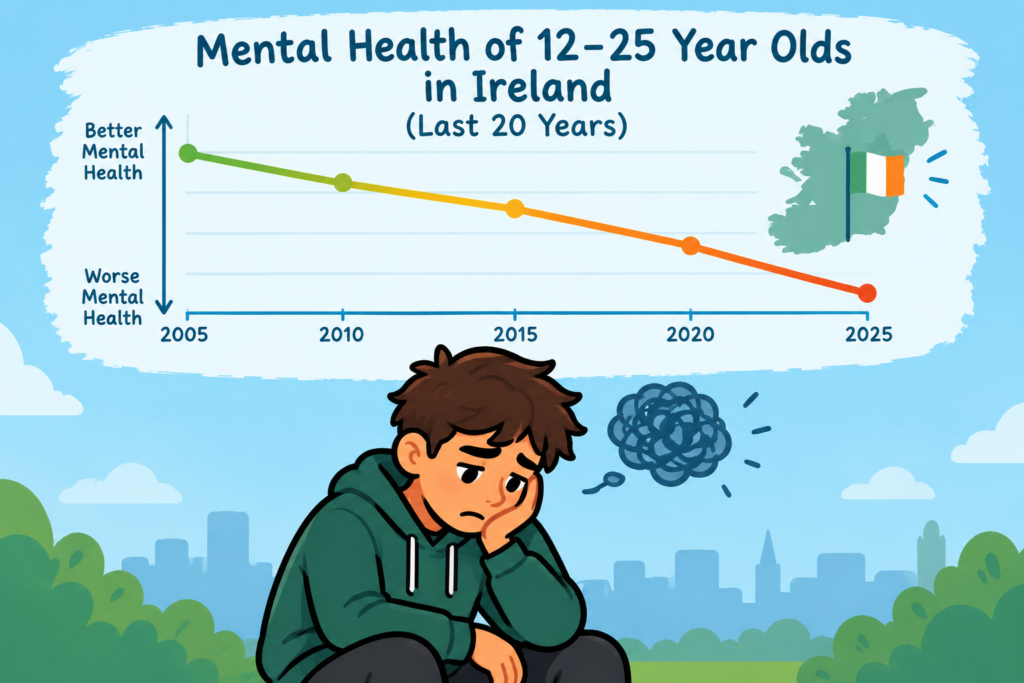
A secondary school aged boy from ireland looking depressed while a graph of mental health for those aged 12 to 25 (children to young adults) in Ireland is displayed above

Unfortunately, in recent decades the issue has, according to the UCD and Jigsaw developed My World report, only worsened, especially for young people, with nearly a doubling of anxiety and depression between 2012 and 2022 in adolescents and young adults (ages between 12 and 25) (2), while a 2026 survey notes 10% more respondents reported feeling depressed at some stage in their life compared with 2024 (6).

To tackle the issue it's important to first understand why this is happening.

Why Irish Mental Health is Worsening

Poor mental health can have many different causes and is often the result of multiple factors compounding. In our nation's case both are true. Some of the biggest contributors include:
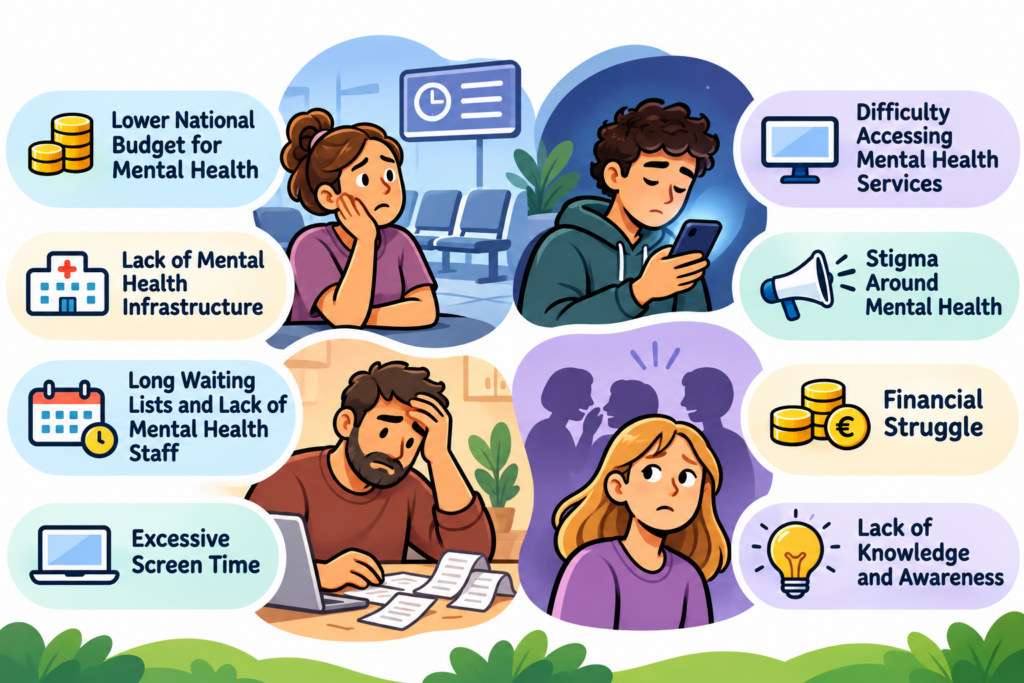
A smaller allocation of national budget to mental health in comparison to other European countries (7).

  • Only ~6% of our health budget (8) in comparison to the European average of 6.7% (7).
    • Other countries of similar wealth status contribute between 8-15%.
      • e.g. Netherlands, United Kingdom, Germany, Sweden, France etc.
    • The figure also falls far below the OECD recommended 10-12% (7).
  • A lack of mental health infrastructure.
    • Ireland has approximately 32 psychiatric beds per 100,000 population, half the EU average (9).
  • Difficulty accessing mental health services.
    • A 2023 report found 44% of people in Ireland have either personally experienced or know someone who has had difficulty accessing mental health services (10).
  • Stigma around metal health discussion still being widespread.
    • 43% of survey respondents struggling with their mental wellbeing didn’t reach out for support due to shame or fear of judgement (6).
  • Financial struggle.
    • The aware 2026 survey identified financial pressures to be the most common contributor to poor mental health in Ireland with 54% of adults citing it as negatively impacting their mental wellbeing (6).
      • Young people in particular cited these worries more than any other age group.
      • Nearly half of young people self-report being unable to afford mental health treatment (11).
  • Excessive screen time.
    • 35.4% of respondents pointed to screen time as a barrier to supporting their mental health (12).
  • Lack of knowledge around improving or maintaining mental wellbeing.
    • 20% say they don't know how to support their mental health (12).
  • Long waiting lists and lack of mental health staff.
    • In 2018 it was estimated we would need 800 psychiatric consultants in Ireland to meet demand safely (13). As of 2026 only 551 positions are filled (14)(15) .
      • A 10% understaffing is considered severe, the above statistic equates to a 31% shortage.
    • 1 in 14 people needing mental health consultation over a 12 month period did not receive it due to long waiting lists and/or cost (5).

With an issue this prevalent and concerning, every form of therapy is important to consider. Given that physical activity doesn’t require a pharmacological prescription or involve a waiting list, perhaps it can provide a quick and synergistic solution for tackling the mental health crisis. But what does science say?

Exercise and Sport Improves Mental Health

In 2024 a high quality research paper was published that examined 218 different physical activity studies, for a total of 14,170 participants, to determine how big of an effect various types and intensity levels of movement and exercise can have on mental health. Exercise interventions such as walking, jogging, yoga, and resistance/strength training resulted in moderate-to-large reductions in depression, with higher intensity activities potentially having similar or slightly greater effects than typical forms of talk therapy or medicinal based treatments (16). 

While this study looked specifically at adults exercising, some research has also examined what happens later in adult life when a person has a physically active childhood.

For example a study looking at children in Sweden found that children who engaged in consistent physical activity at age 11 also had less depression, anxiety, substance abuse problems and psychiatric disorders by age 18 (17).
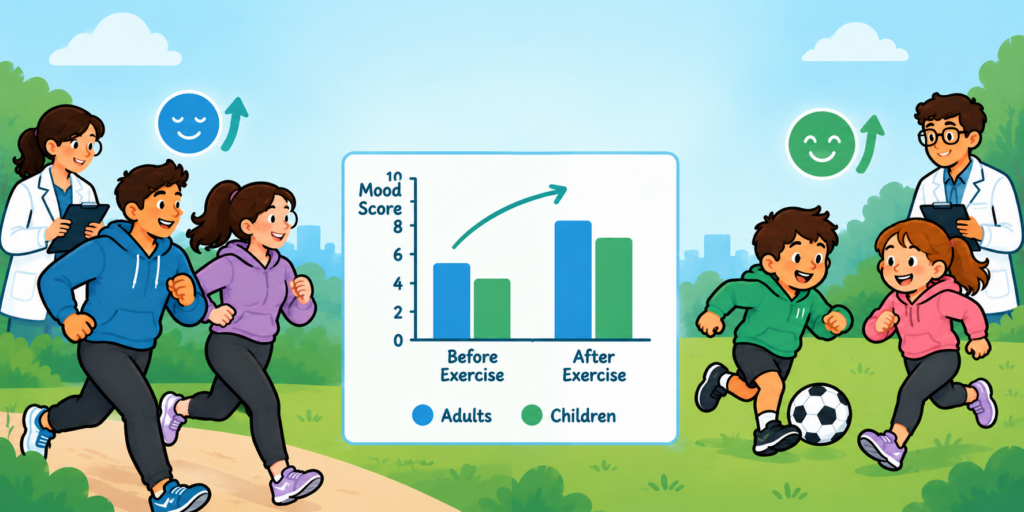
Scientists observing adults and children improving their mental health through physical activity, exercise and sport.

They don't have to wait until adulthood either, a 2025 review which looked at dozens of scientific studies found a reduction in depression and anxiety symptoms in young people who participated in physical activity interventions such as jogging, weight lifting or mixed movement training, (many types of movement in one session such as jumping, crawling and tumbling) like the sessions we deliver in schools across Ireland! (18)

Another study from 2025 demonstrated how positive effects can be felt in the short-term too, with significant reductions in depressive symptoms occurring as early as the 4th week of an exercise intervention and reducing further in the following 4 weeks (19).

What Type of Movement Helps the Most?

When discussing different forms of exercise and their effectiveness for improving mental health there are several pertinent points that should be taken into consideration. For example:
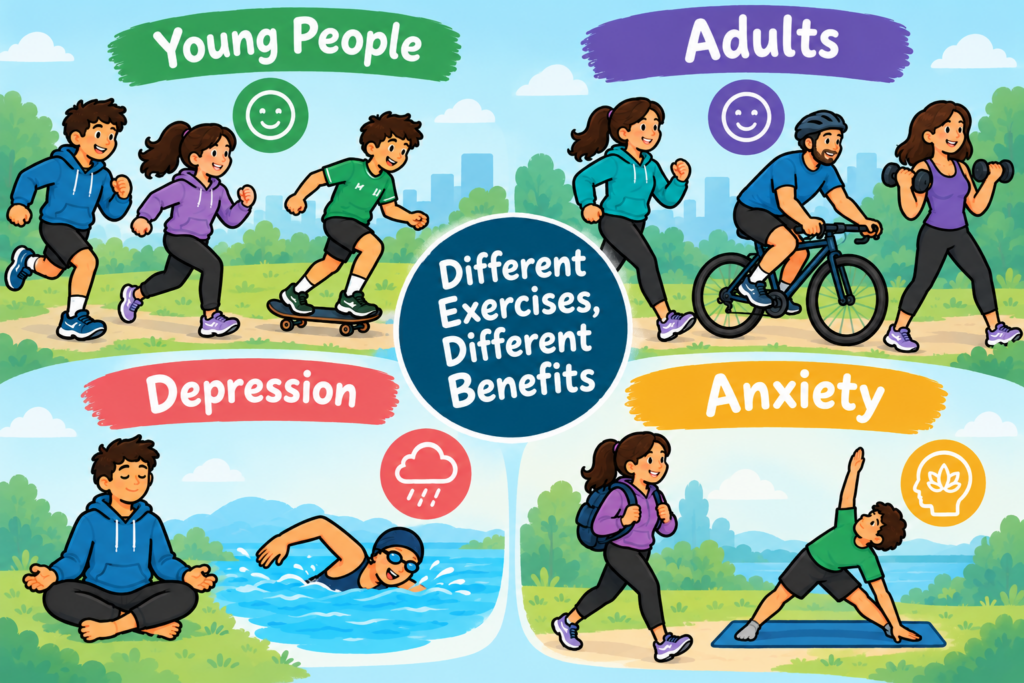
A cartoon image that shows young people, old people, people with depression and people with anxiety doing different exercises and receiving different benefits.
  • What helps in the short-term may not be as effective in the long-term and vice versa
  • Exercises that help the most might also be difficult to maintain
  • Physical activity that can be started quickly and easily may be more effective than trying to do things “perfectly”
  • Different forms of exercise and timeframes might have positive effects on one aspect of mental health but not another, e.g. depression but not anxiety.
  • Some activities might be effective for certain individuals, but not for others.

Keeping those points in mind, some of the most effective interventions are those that involve higher levels of exercise intensity. For example, running is observed to be more effective than walking, even though walking still provides some benefit (16)(17).

Aerobic forms of exercise also seem to have a bigger impact on mental health than strength based exercises (16) (See last month’s blog for an explanation of aerobic vs strength based exercises), possibly due to how it releases certain feel-good hormones such as BDNF (brain derived neurotrophic factor) (20). However, research shows study participants are much more likely to maintain a strength training routine than an aerobic exercise routine (16). Below is a table outlining effectiveness vs dropout rate for various types of exercise.

ExerciseEffectivenessDropout Rate
DanceVery HighHigh
JoggingHighModerate
YogaModerateVery Low
Strength TrainingModerateVery Low
Tai-chi/Qi-GongModerateLow
Mixed Aerobic Exercise*ModerateModerate
WalkingModerateModerate

Some of the biggest improvements in mental health are seen in studies that combine aerobic exercise and strength training routines (21), both due to larger effect sizes and participants adhering to the routines for longer, likely due to less boredom.

More exercise per week, over 180 minutes in total, also results in larger mental health improvements when compared with less than 120 minutes or 120 minutes to 180 minutes in total per week (22). That can be as little as 30-40 minutes of exercise 6 days per week!

Organised sport also seems to offer some advantages that other forms of activity might not, with reported protective effects against depression for boys as well as reduced anxiety and addiction issues for both boys and girls later in life (17). The social benefits and accountability that come with joining a sports club or group supply their own unique benefits. Similarly exercise performed in a group has a greater effect size than exercise performed alone in a gym (23).

How Can You Help Others?

Lobby for More PE!

Despite the strong evidence for physical activity’s therapeutic effects on mental health, only 20% of secondary schools meet the official 120-minute weekly PE guideline (24) the student population who, due to academic and social related mental pressures, could potentially benefit most from physical activity.

Primary schools until recently have only been required to reach 60 weekly minutes of PE and achieve an estimated average of 85%, but children at this age can still see improved mental health with weekly volumes higher than 120 minutes (17).

Encouraging those in positions of power to make the necessary changes to PE across Ireland is an important requisite to change this, but it's not the only form of action we can take!

Practice what you preach.

As discussed in our September blog, one of the most powerful ways to encourage children to exercise is to lead by example and to be motivated by the enjoyment of an activity, rather than by the obligation to do it for health reasons. Children model what they see and their relationship with physical activity is subconsciously formed through vicarious experience, that is to say, seeing how their family, friends and trusted adults in their lives feel about and engage in exercise affects how they feel about it without realising.

But alongside exercise behaviour children also mirror anxiety, stress and depression (25). Prioritizing your own mental health is just as important in order to help others!

Believe - That things can get better.

In the same way science has given us a blueprint on how to build muscle or improve our general fitness, we now have some very successful and proven methods for improving mental health and in more cases than you might think, completely reversing conditions like depression and anxiety.

One study which used aerobic exercises such as brisk walking, jogging and cycling to treat major depressive disorder, resulted in 70% of participants who completed the full 10 month program being in complete clinical remission, or for lack of a better term, completely cured of their depression (26). A follow up 4 months later also found only 8% of those participants had relapsed compared to 38% who were given medication for 10 months and then stopped for the 4 month period (27). Even higher remission rates or response rates (the percentage of people who feel significantly better mentally) have been produced with newer technologies (28) and using a combination of methods (29).

In order to avail of these forms of relief, believing you can improve your situation and understanding that you don't need to figure out how on your own is the one of the first and most crucial steps! Consult with the pros, confide in as many people as you need. If you know someone who is, or suspect someone is, struggling with their mental health, help them understand, be the person they can talk to and don't wait to take action.

In Summary

Mental health has declined in Ireland over the last few decades, especially among children, adolescents and young adults.

Exercise and sport in its various forms is a proven and effective treatment that can be implemented easily and quickly, which may help alleviate some of the burden of poor mental health.

Research has observed the most effective exercise routines for mental health:

  • Include a mix of aerobic exercise and strength training 
  • Are performed at moderate to high intensity
  • Exceed 180 total minutes per week
  • Involve training in groups or clubs rather than alone

But any form of exercise can help and the best routine for you is the one you enjoy and can maintain long-term.
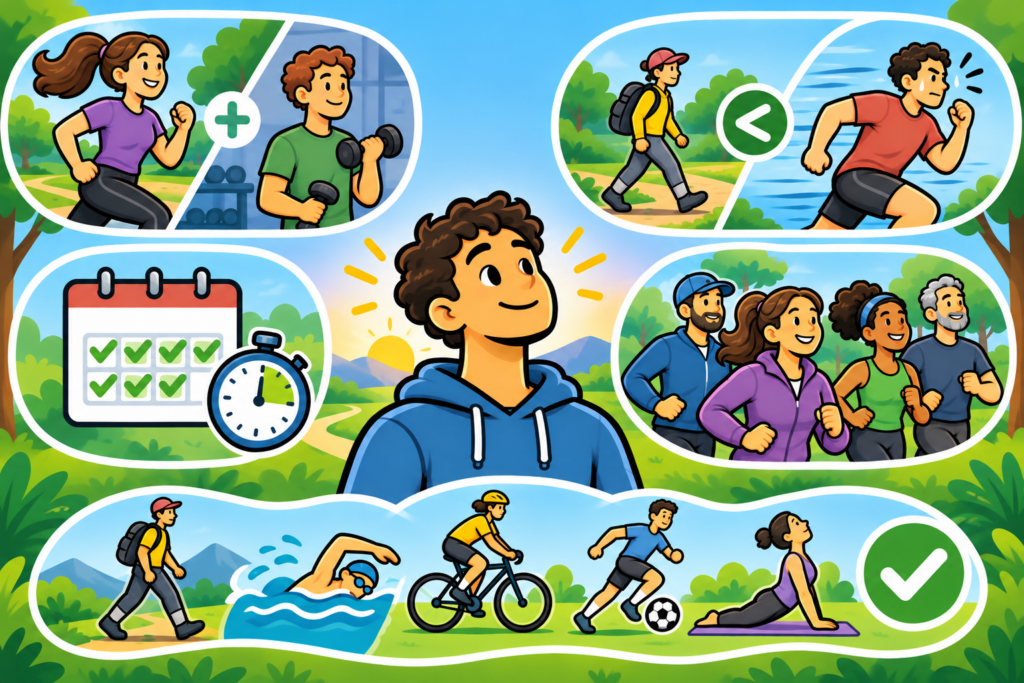
A cartoon image depicting the most effective exercise routines for mental health

Helping young people achieve better mental health through exercise starts with leading by example and being motivated by enjoyment rather than obligation. Something we strongly believe and practice at School Fitness Ireland.

If you’re looking to partake in a movement trend this Movember, perhaps it’s worth considering one of our programmes or one-day workshops. You can click the link below to find out more!

References:

  1. OECD, European Union. Health at a Glance: Europe 2018: State of Health in the EU Cycle. Paris: OECD Publishing; 2018. Available from: https://doi.org/10.1787/health_glance_eur-2018-en
  2. Dooley B, Fitzgerald A. My World Survey: National survey of youth mental health in Ireland. Dublin: Headstrong - The National Centre for Youth Mental Health, and UCD School of Psychology; 2012
  3. Solmi M, Radua J, Olivola M, Croce E, Soardo L, Salazar de Pablo G, et al. Age at onset of mental disorders worldwide: Large-scale meta-analysis of 192 epidemiological studies. Molecular Psychiatry. 2021 June 2;27(1):281–95.
  4. Dooley N, Power E, Healy H, Cotter D, Cannon M. Mental health of Irish adolescents following the COVID-19 pandemic: Results from a population-based cross-sectional survey. Irish Journal of Psychological Medicine. 2024 Sept 19;41(4):1–9.
  5. Central Statistics Office. Irish Health Survey - Main Results 2025 [Internet]. Cork: Central Statistics Office; 2026 May 20 [cited 2026 Nov 17]. Available from: https://www.cso.ie/en/releasesandpublications/ep/p-ihsmr/irishhealthsurvey-mainresults2025/
  6. Aware. Fourth Annual Aware National Mental Health Survey [Internet]. Dublin: Aware; 2026 Oct [cited 2026 Nov 2]. 5 p. Available from: https://www.aware.ie/national-survey-2026/
  7. Organisation for Economic Co-operation and Development (OECD). A new benchmark for mental health systems: tackling the social and economic costs of mental ill health [Internet]. Paris: OECD Publishing; 2021 Jun 8 [cited 2026 Nov 12]. (OECD Health Policy Studies). Available from: https://www.oecd.org/en/publications/a-new-benchmark-for-mental-health-systems_4ed890f6-en.html
  8. Houses of the Oireachtas. Mental Health Services – Wednesday, 18 Mar 2026 – Parliamentary Questions (34th Dáil) [Internet]. Dublin: Houses of the Oireachtas; 2026 Mar 18 [cited 2026 Nov 12]. Available from: https://www.oireachtas.ie/en/debates/question/2026-03-18/1790/
  9. Eurostat. Hospital beds by function and type of care (hlth_rs_bds1) [Internet]. Luxembourg: Eurostat; 2026 Jul 13 [cited 2026 Nov 12]. Available from: https://doi.org/10.2908/HLTH_RS_BDS1
  10. European Commission, Directorate-General for Health and Food Safety. Flash Eurobarometer 530: Mental health [Internet]. Luxembourg: Publications Office of the European Union; 2023 Oct 9 [cited 2026 Nov 12]. Available from: https://doi.org/10.2875/48999
  11. Cox J. Almost half of young adults cite cost issue in seeking mental health support, says survey. The Irish Times [Internet]. 2026 Oct 6 [cited 2026 Nov 17];Ireland. Available from: https://www.irishtimes.com/ireland/2026/10/06/almost-half-of-young-adults-cite-cost-issue-in-seeking-mental-health-support-says-survey/
  12. Mental Health Ireland. Survey findings & key takeouts: August 2025 [Internet]. Dublin: Mental Health Ireland; 2025 Oct 6 [cited 2026 Nov 12]. Available from: mentalhealthireland.ie
  13. College of Psychiatrists of Ireland. Committee on Future of Mental Health Care told psychiatrist posts in Ireland currently at 50% below the required amount: high trainee satisfaction levels yet low take up in posts here [Internet]. Dublin: College of Psychiatrists of Ireland; 2018 Mar 7 [cited 2026 Nov 17]. Available from: https://irishpsychiatry.ie/wp-content/uploads/2024/11/Committee-on-Future-of-Mental-Health-Care-Told-Psychiatrist-Posts-in-Ireland-Currently-At-50-Below-the-Required-Amount.pdf
  14. Sinn Féin. 49 consultant psychiatrist posts lie vacant and Government can't say how many new ones Budget 2027 will fund – Sorca Clarke TD [Internet]. Dublin: Sinn Féin; 2026 Nov 16 [cited 2026 Nov 17]. Available from: https://sinnfein.ie/news/49-consultant-psychiatrist-posts-lie-vacant-and-government-cant-say-how-many-new-ones-budget-2027-will-fund-sorca-clarke-td/
  15. Houses of the Oireachtas. Hospital Staff: Parliamentary Questions (34th Dáil), Question No. 274 [38111/26] [Internet]. Dublin: Houses of the Oireachtas; 2026 May 20 [cited 2026 Nov 17]. Available from: https://www.oireachtas.ie/en/debates/question/2026-05-20/274/
  16. Noetel M, Sanders T, Gallardo-Gómez D, Taylor P, Cruz BP, Hoek D van den, et al. Effect of exercise for depression: Systematic review and network meta-analysis of randomised controlled trials. The BMJ [Internet]. 2024 Feb 14 [cited 2026 Sept 1];384(8417). Available from: https://www.bmj.com/content/384/bmj-2023-075847 
  17. Lundgren O, Tigerstrand H, Lebena A, Löf M, Ludvigsson J. Impact of physical activity on the incidence of psychiatric conditions during childhood: A longitudinal Swedish birth cohort study. British Journal of Sports Medicine [Internet]. 2025 May 13 [cited 2026 Sept 1];59(14):bjsports–108148. Available from: https://bjsm.bmj.com/content/59/14/1001
  18. Singh B, Bennett H, Miatke A, Dumuid D, Curtis R, Ferguson T, et al. Systematic umbrella review and meta-meta-analysis: effectiveness of physical activity in improving depression and anxiety in children and adolescents. J Am Acad Child Adolesc Psychiatry. 2026 Feb;65(2):171-86. doi: 10.1016/j.jaac.2025.04.007.
  19. Yan H, Chen R, Chen D, Li C. Effectiveness of exercise intervention on children and adolescents with depression: A systematic review and meta-analysis of randomized controlled trial. Frontiers in Psychiatry. 2025 Nov 4;16.
  20. Monèm Jemni, Zaman R, Frederick Robert Carrick, Neil David Clarke, Marina M, Bottoms L, et al. Exercise improves depression through positive modulation of brain-derived neurotrophic factor (BDNF). A review based on 100 manuscripts over 20 years. Frontiers in Physiology. 2023 Mar 8;14.
  21. Yu Q, Wong KK, Lei OK, Nie J, Shi Q, Zou L, et al. Comparative effectiveness of multiple exercise interventions in the treatment of mental health disorders: A systematic review and network meta-analysis. Sports Medicine - Open. 2022 Oct 29;8(1).
  22. Wang H, Liu Q, Pan Y. Impact of combiner aerobic and resistance training on depression: A systematic review and meta-analysis of randomized controlled trials. BMC Sports Science, Medicine and Rehabilitation. 2025 Jan 23;17(1).
  23. Munro NR, Teague S, Somoray K, Simpson A, Budden T, Jackson B, et al. Effect of exercise on depression and anxiety symptoms: Systematic umbrella review with meta-meta-analysis. British Journal of Sports Medicine [Internet]. 2026 Feb 10 [cited 2026 Sept 2];60(8):590–9. Available from: https://bjsm.bmj.com/content/60/8/590
  24. Woods CB, Ng KW, Britton U, McClelland J, O'Keeffe B, Sheikhi A, et al. The Children's Sport Participation and Physical Activity Study 2022 (CSPPA 2022). Physical Activity for Health Research Centre, University of Limerick; Sport Ireland; Healthy Ireland; Sport Northern Ireland. 2023. doi:10.34961/researchrepository-ul.23609157
  25. Pérez‐Edgar K, LoBue V, Buss KA. From parents to children and back again: Bidirectional processes in the transmission and development of depression and anxiety. Depression and Anxiety. 2021 Dec;38(12):1198–200.
  26. Blumenthal JA, Babyak MA, Moore KA, Craighead WE, Herman S, Khatri P, et al. Effects of exercise training on older patients with major depression. Archives of Internal Medicine [Internet]. 1999 Oct 1 [cited 2026 Nov 9];159(19). Available from: https://doi.org/10.1001/archinte.159.19.2349
  27. Babyak M, Blumenthal JA, Herman S, Khatri P, Doraiswamy M, Moore K, et al. Exercise treatment for major depression: Maintenance of therapeutic benefit at 10 months. Psychosomatic medicine. 2000;62(5):633–8.
  28. Cole EJ, Stimpson KH, Bentzley BS, Gulser M, Cherian K, Tischler C, et al. Stanford accelerated intelligent neuromodulation therapy for treatment-resistant depression. American Journal of Psychiatry. 2020 Aug 1;177(8):716–26.
  29. March J. The treatment for adolescents with depression study (TADS). Archives of General Psychiatry [Internet]. 2007 Oct 1 [cited 2026 Nov 10];64(10):1132. Available from: https://pubmed.ncbi.nlm.nih.gov/17909125/

© 2022–2026 School Fitness Ireland. All rights reserved.

linkedin facebook pinterest youtube rss twitter instagram facebook-blank rss-blank linkedin-blank pinterest youtube twitter instagram