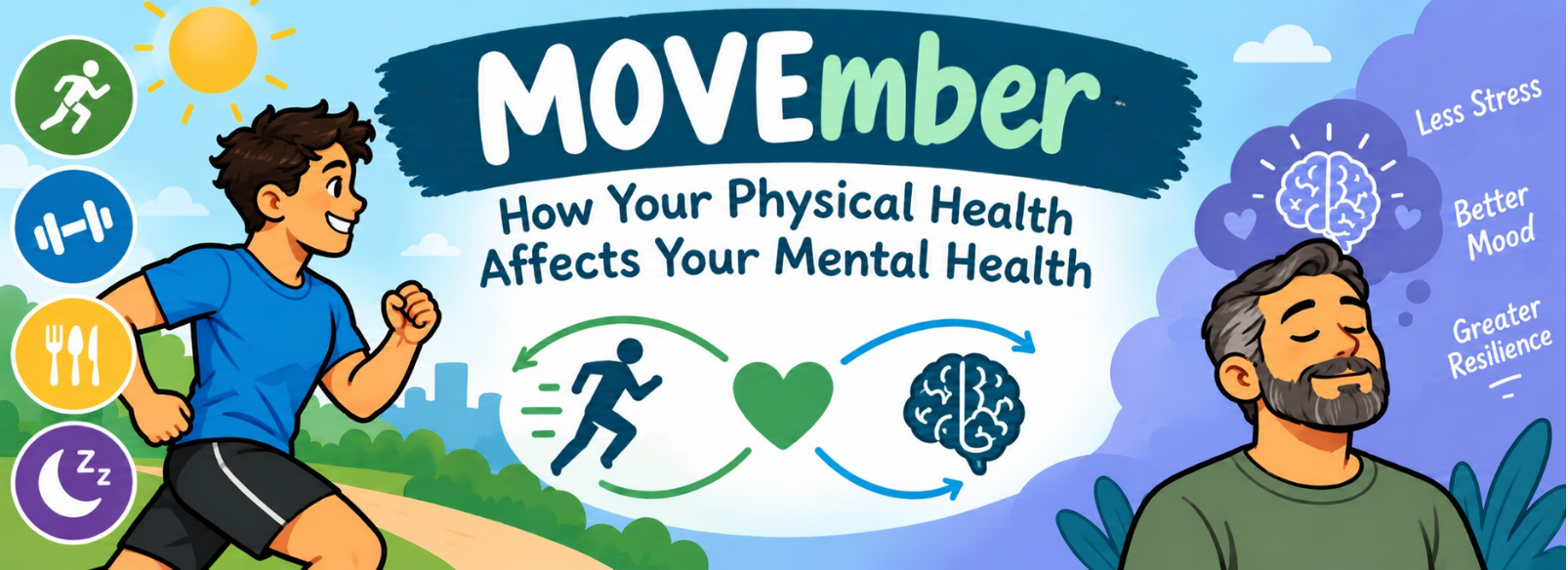
Why is Ireland’s mental health so far behind other European countries? (1) And what actions can we take to improve both young people's and our own mental health?
This November marks the 23rd year of the men’s mental health awareness event “Movember”. In recent years there has been an increased focus by various charities on incorporating movement during this event, including through physical or fitness-based challenges such as the “60km challenge” which, representing the 60 mens' lives lost to suicide globally every hour, encourages participants to walk or run 60 kilometres over the course of the month.
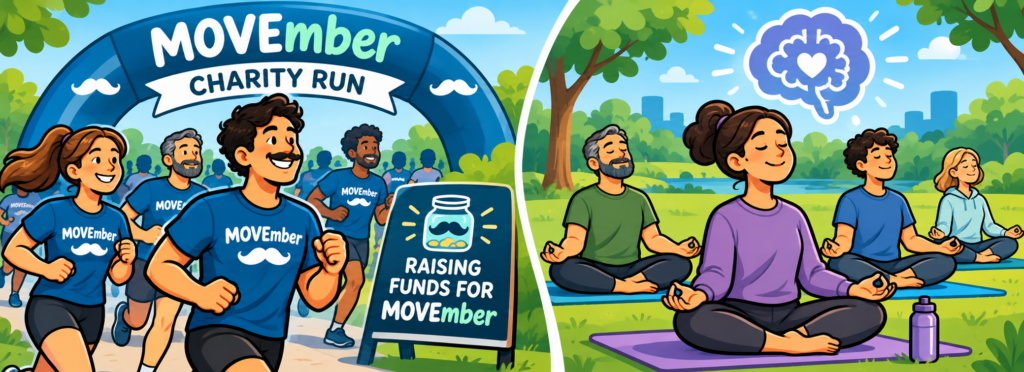
Over the last few years Ireland has seen greater adoption of these Movember related fundraisers, especially from sports clubs and the GAA, perhaps partly in response to the concerning rates of poor mental health among young people which continues to rise (2). The increased involvement of movement, sport and exercise in the fight against mental health conditions might just be a key turning point for Ireland however.
The connection between physical activity and mental health is long established, and while it’s commonly understood that physical health can have an effect on your mental health, the current science shows just how profound that effect can be and how early in life it can make an impact.
When compared to other EU countries Ireland ranks joint 3rd highest for prevalence of reported mental health disorders out of 26 nations (1). One of the most vulnerable groups with regards to poor mental health are those between the ages of 12 and 25, an age range in which the vast majority of mental health conditions first appear or develop. In fact, one global study discovered that 34.6% of all mental health conditions emerge by age 14 and 62.5% by age 25 (3).
While that study included a large spectrum of mental conditions in its analysis, ranging from generalised anxiety disorder to autism spectrum disorder, the mental health landscape in Ireland’s younger population is perhaps best captured by a recent study conducted by researchers at the Royal College of Surgeons in Ireland (RCSI). This research found that 29% of secondary-school adolescents described their mental health as "bad" or "very bad” (4).
The Central Statistics Office for Ireland has also reported that those aged 15-24 in Ireland were 6x more likely to report their mental health as bad compared to those aged 65-74 (5).
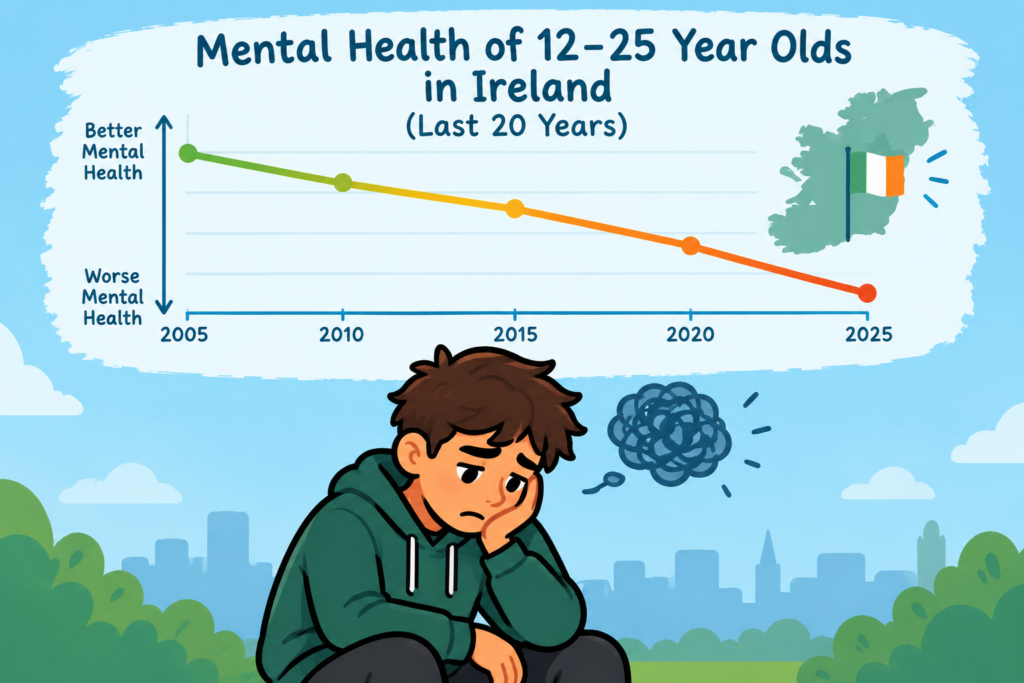
Unfortunately, in recent decades the issue has, according to the UCD and Jigsaw developed My World report, only worsened, especially for young people, with nearly a doubling of anxiety and depression between 2012 and 2022 in adolescents and young adults (ages between 12 and 25) (2), while a 2026 survey notes 10% more respondents reported feeling depressed at some stage in their life compared with 2024 (6).
To tackle the issue it's important to first understand why this is happening.
Poor mental health can have many different causes and is often the result of multiple factors compounding. In our nation's case both are true. Some of the biggest contributors include:
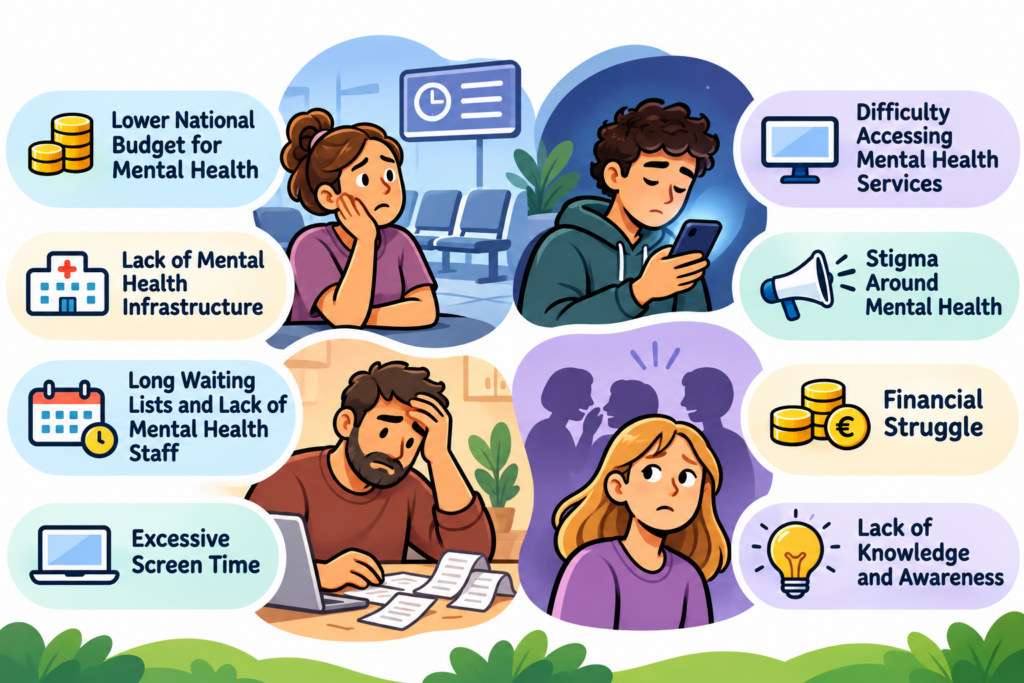
A smaller allocation of national budget to mental health in comparison to other European countries (7).
With an issue this prevalent and concerning, every form of therapy is important to consider. Given that physical activity doesn’t require a pharmacological prescription or involve a waiting list, perhaps it can provide a quick and synergistic solution for tackling the mental health crisis. But what does science say?
In 2024 a high quality research paper was published that examined 218 different physical activity studies, for a total of 14,170 participants, to determine how big of an effect various types and intensity levels of movement and exercise can have on mental health. Exercise interventions such as walking, jogging, yoga, and resistance/strength training resulted in moderate-to-large reductions in depression, with higher intensity activities potentially having similar or slightly greater effects than typical forms of talk therapy or medicinal based treatments (16).
While this study looked specifically at adults exercising, some research has also examined what happens later in adult life when a person has a physically active childhood.
For example a study looking at children in Sweden found that children who engaged in consistent physical activity at age 11 also had less depression, anxiety, substance abuse problems and psychiatric disorders by age 18 (17).
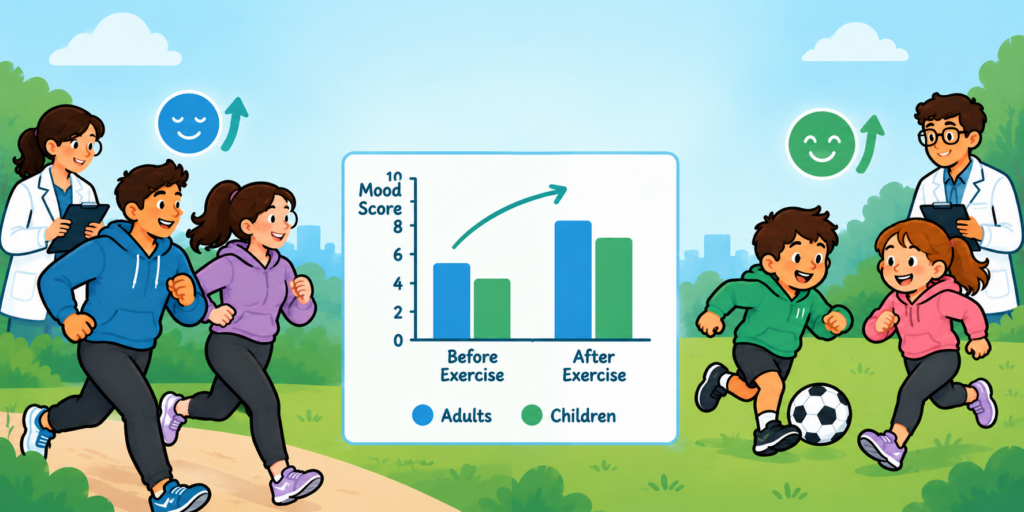
They don't have to wait until adulthood either, a 2025 review which looked at dozens of scientific studies found a reduction in depression and anxiety symptoms in young people who participated in physical activity interventions such as jogging, weight lifting or mixed movement training, (many types of movement in one session such as jumping, crawling and tumbling) like the sessions we deliver in schools across Ireland! (18)
Another study from 2025 demonstrated how positive effects can be felt in the short-term too, with significant reductions in depressive symptoms occurring as early as the 4th week of an exercise intervention and reducing further in the following 4 weeks (19).
When discussing different forms of exercise and their effectiveness for improving mental health there are several pertinent points that should be taken into consideration. For example:
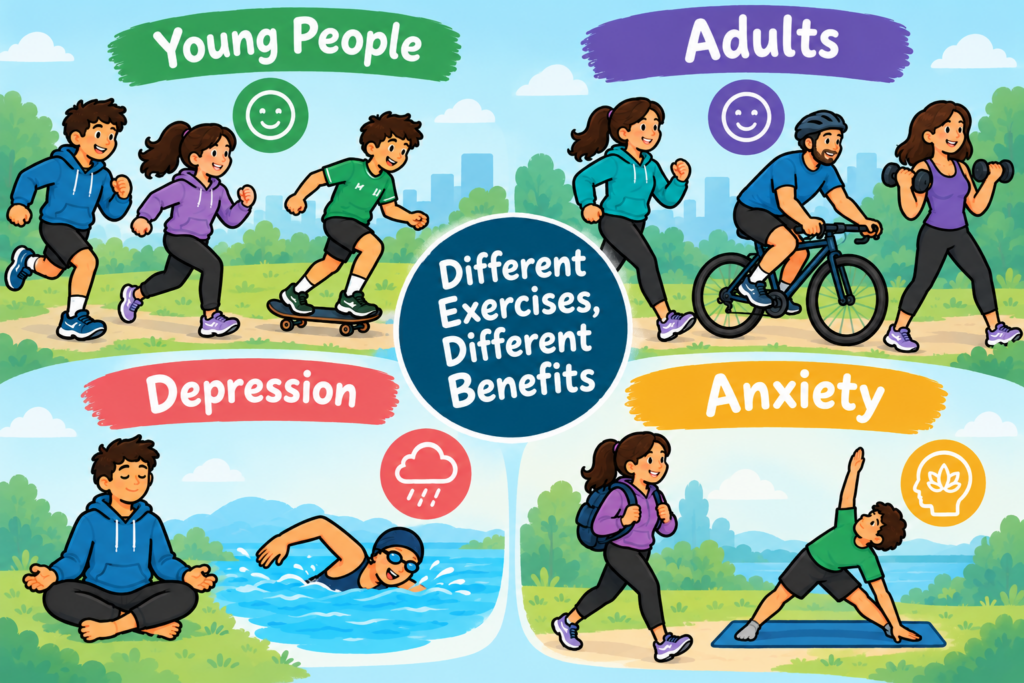
Keeping those points in mind, some of the most effective interventions are those that involve higher levels of exercise intensity. For example, running is observed to be more effective than walking, even though walking still provides some benefit (16)(17).
Aerobic forms of exercise also seem to have a bigger impact on mental health than strength based exercises (16) (See last month’s blog for an explanation of aerobic vs strength based exercises), possibly due to how it releases certain feel-good hormones such as BDNF (brain derived neurotrophic factor) (20). However, research shows study participants are much more likely to maintain a strength training routine than an aerobic exercise routine (16). Below is a table outlining effectiveness vs dropout rate for various types of exercise.
| Exercise | Effectiveness | Dropout Rate |
| Dance | Very High | High |
| Jogging | High | Moderate |
| Yoga | Moderate | Very Low |
| Strength Training | Moderate | Very Low |
| Tai-chi/Qi-Gong | Moderate | Low |
| Mixed Aerobic Exercise* | Moderate | Moderate |
| Walking | Moderate | Moderate |
Some of the biggest improvements in mental health are seen in studies that combine aerobic exercise and strength training routines (21), both due to larger effect sizes and participants adhering to the routines for longer, likely due to less boredom.
More exercise per week, over 180 minutes in total, also results in larger mental health improvements when compared with less than 120 minutes or 120 minutes to 180 minutes in total per week (22). That can be as little as 30-40 minutes of exercise 6 days per week!
Organised sport also seems to offer some advantages that other forms of activity might not, with reported protective effects against depression for boys as well as reduced anxiety and addiction issues for both boys and girls later in life (17). The social benefits and accountability that come with joining a sports club or group supply their own unique benefits. Similarly exercise performed in a group has a greater effect size than exercise performed alone in a gym (23).
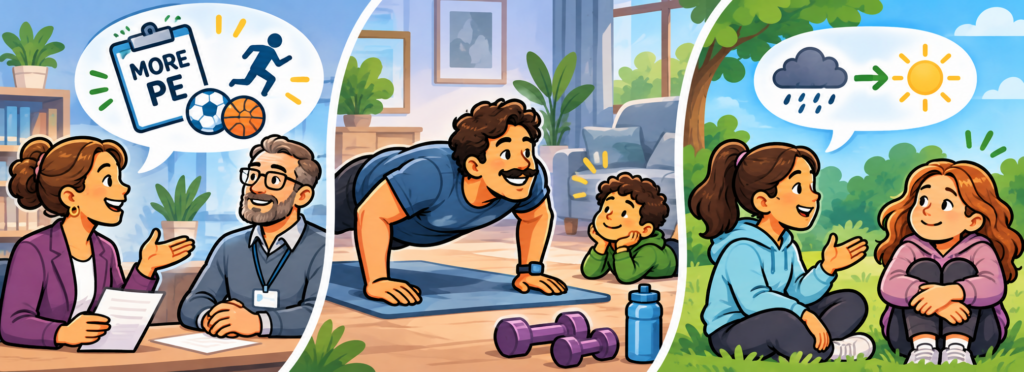
Lobby for More PE!
Despite the strong evidence for physical activity’s therapeutic effects on mental health, only 20% of secondary schools meet the official 120-minute weekly PE guideline (24) the student population who, due to academic and social related mental pressures, could potentially benefit most from physical activity.
Primary schools until recently have only been required to reach 60 weekly minutes of PE and achieve an estimated average of 85%, but children at this age can still see improved mental health with weekly volumes higher than 120 minutes (17).
Encouraging those in positions of power to make the necessary changes to PE across Ireland is an important requisite to change this, but it's not the only form of action we can take!
Practice what you preach.
As discussed in our September blog, one of the most powerful ways to encourage children to exercise is to lead by example and to be motivated by the enjoyment of an activity, rather than by the obligation to do it for health reasons. Children model what they see and their relationship with physical activity is subconsciously formed through vicarious experience, that is to say, seeing how their family, friends and trusted adults in their lives feel about and engage in exercise affects how they feel about it without realising.
But alongside exercise behaviour children also mirror anxiety, stress and depression (25). Prioritizing your own mental health is just as important in order to help others!
Believe - That things can get better.
In the same way science has given us a blueprint on how to build muscle or improve our general fitness, we now have some very successful and proven methods for improving mental health and in more cases than you might think, completely reversing conditions like depression and anxiety.
One study which used aerobic exercises such as brisk walking, jogging and cycling to treat major depressive disorder, resulted in 70% of participants who completed the full 10 month program being in complete clinical remission, or for lack of a better term, completely cured of their depression (26). A follow up 4 months later also found only 8% of those participants had relapsed compared to 38% who were given medication for 10 months and then stopped for the 4 month period (27). Even higher remission rates or response rates (the percentage of people who feel significantly better mentally) have been produced with newer technologies (28) and using a combination of methods (29).
In order to avail of these forms of relief, believing you can improve your situation and understanding that you don't need to figure out how on your own is the one of the first and most crucial steps! Consult with the pros, confide in as many people as you need. If you know someone who is, or suspect someone is, struggling with their mental health, help them understand, be the person they can talk to and don't wait to take action.
Mental health has declined in Ireland over the last few decades, especially among children, adolescents and young adults.
Exercise and sport in its various forms is a proven and effective treatment that can be implemented easily and quickly, which may help alleviate some of the burden of poor mental health.
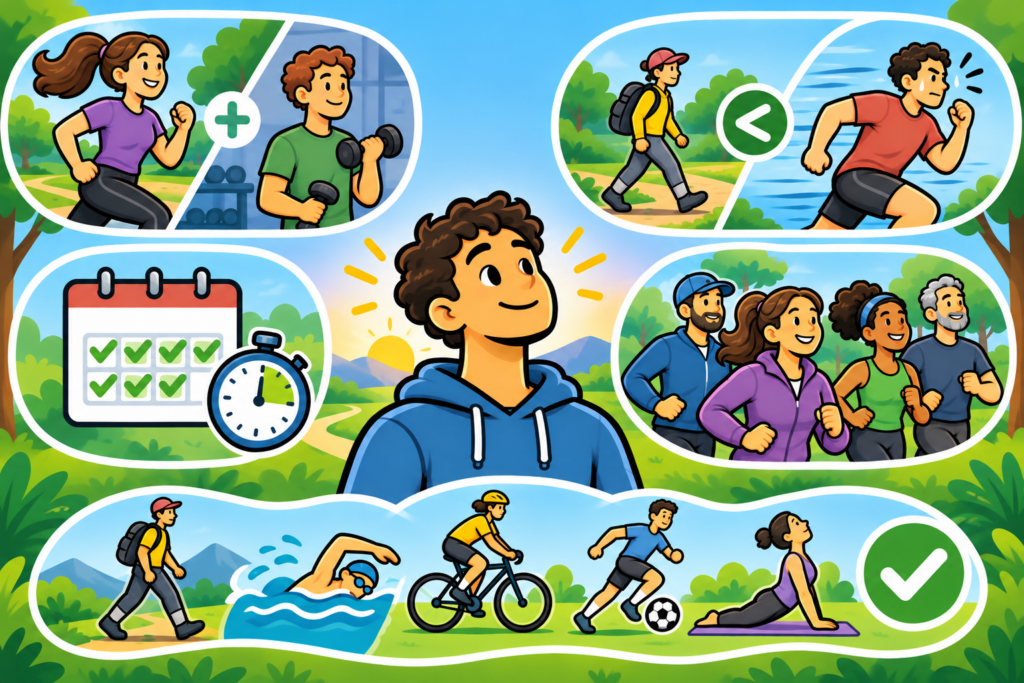
Research has observed the most effective exercise routines for mental health:
But any form of exercise can help and the best routine for you is the one you enjoy and can maintain long-term.
Helping young people achieve better mental health through exercise starts with leading by example and being motivated by enjoyment rather than obligation. Something we strongly believe and practice at School Fitness Ireland.
If you’re looking to partake in a movement trend this Movember, perhaps it’s worth considering one of our programmes or one-day workshops. You can click the link below to find out more!
References:
© 2022–2026 School Fitness Ireland. All rights reserved.