
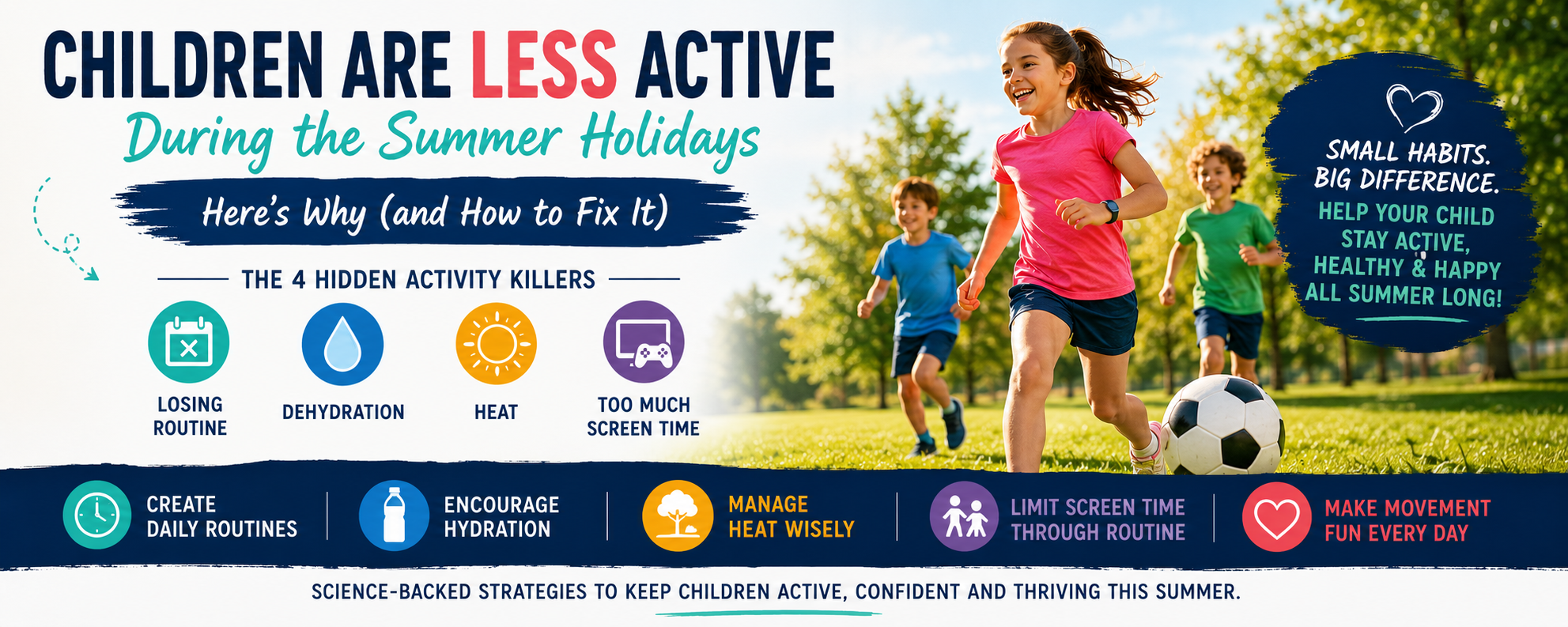
Summer is the time of year in which children’s physical activity reaches its highest levels (1), especially in Ireland where colder temperatures and poor weather may reduce total movement during Autumn and Winter (2). There are however, perhaps unconsidered factors that come into play during the summer holidays which can reduce total physical activity and minimise potential health benefits.
Being aware of them and developing strategies to deal with these issues may create a “health buffer” for the year, where maximising health benefits during Summer can mitigate the consequences of more sedentary behaviours during the later months of the year.
So where can we start?
While more movement occurs during Summer, the majority of that activity happens while children are still attending school. Although holiday time and periods of rest are undoubtedly important for physical and mental rejuvenation, once the summer break arrives activity levels can fall drastically, a phenomenon highlighted well by one study which reported an 18% decrease in total activity and a 45% decrease in moderate-to-vigorous intensity activity (3).
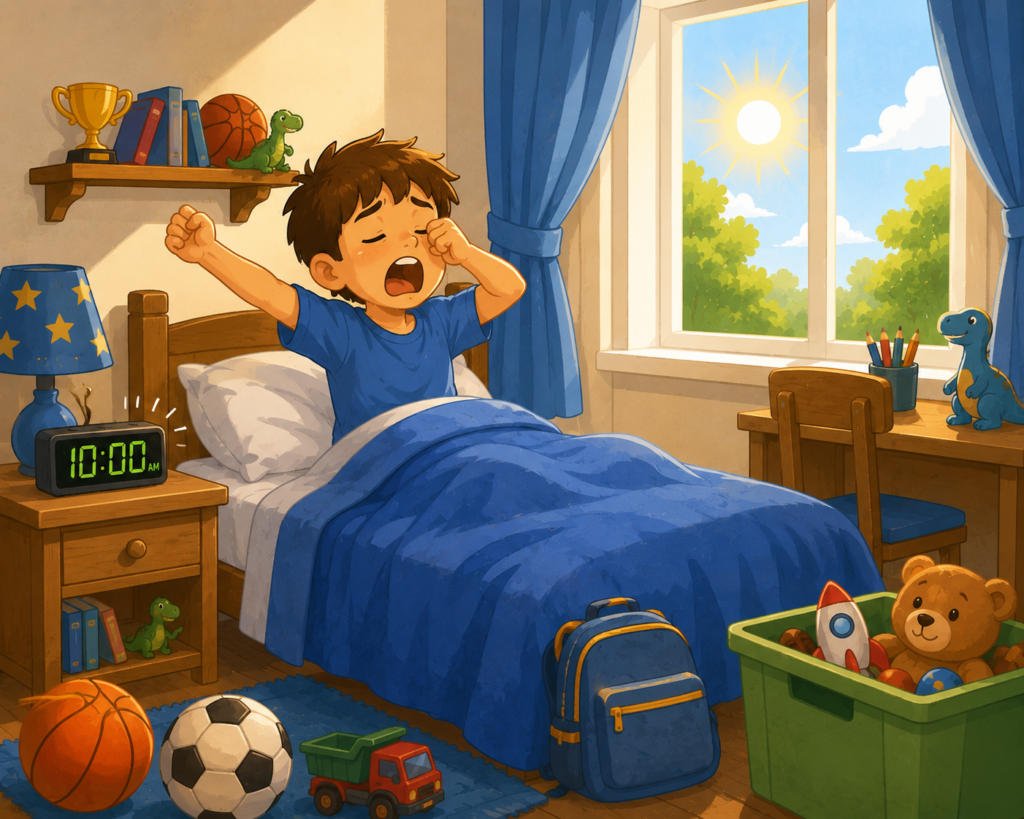
The reason behind these changes has been outlined by “The Structured Days Hypothesis” (4), which states that the routine provided by a school day, such as scheduled break times, physical education classes, commuting to school actively (e.g. on foot or cycling etc.) and after school sports or active clubs fills up time during the day that might otherwise have been used for sedentary activities like screen time. When the school term finishes that’s exactly what was observed to happen for children who were not enrolled in summer camps or had some sort of parental intervention.
Having a daily routine involving both intentional physical activity and tasks requiring movement as well as structured activities organised by parents such as sports camps, extra afternoon or evening time activities, or joint parent-child workouts (a powerful tool we discussed in our last blog here) are just some of the easily implemented solutions to this dilemma!
At School Fitness Ireland we run summer camps all through the summer with that focus in mind. If you’re looking for an active camp for a child or student in your life, you can check out our upcoming camps by clicking here.
While the importance of hydration and heat management are well understood by most in terms of their contributions to general wellness and staying cool, one often overlooked aspect is their interaction with our energy and motivation levels.
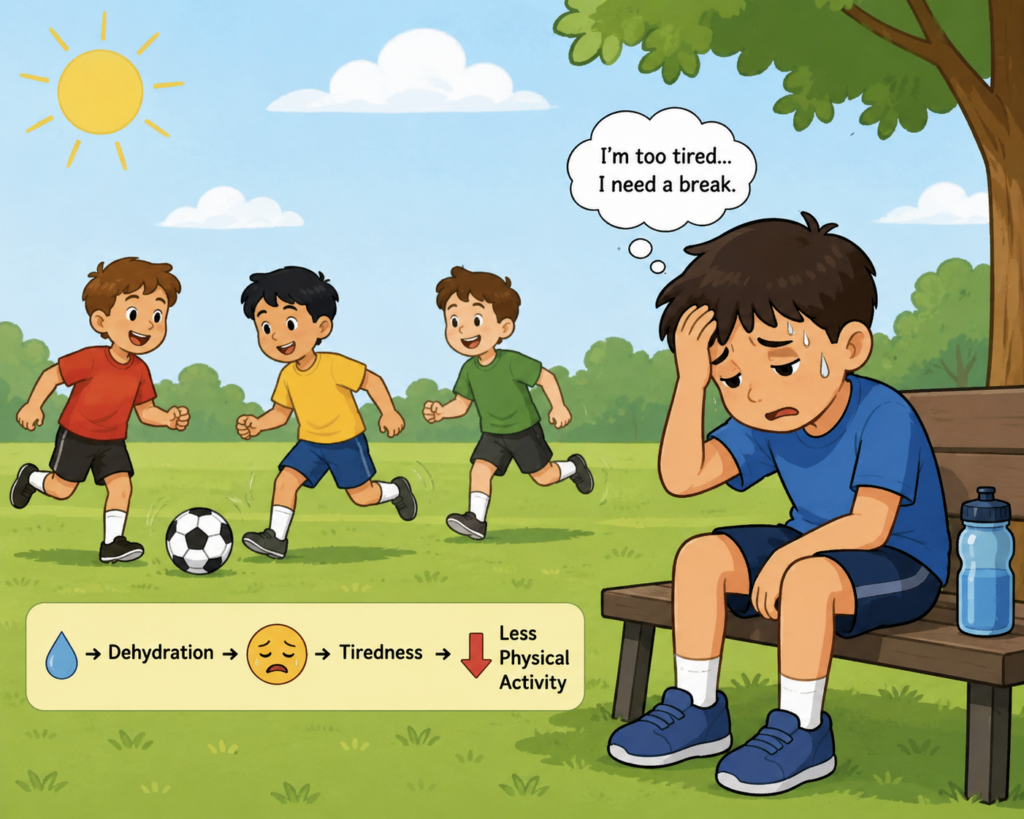
Dehydration causes everything to feel more difficult and tiring (5). Your brain cells have to work harder and fire many more neurons to do the same tasks as when you’re hydrated, not only because a lack of water impairs brain function, but because the brain purposely tries to stop our bodies from wasting energy by making us feel fatigued and directs our attention towards finding water.
Children are even more susceptible than adults to this pitfall for several reasons.
The Effects of Dehydration in children:
| Dehydration level: | Effect: |
| 1% of bodyweight | - Visual attention and alertness drop (8). - Fatigue and grumpiness set in (9). - The heart has to beat faster to maintain the same cardiac output e.g. more effort to run the same distance and speed (10). - Tasks require more conscious effort. (11) |
| 2% of bodyweight | - Short-term memory recall drops (9)(12). - Steep drop off in cognitive performance (9)(5). - Physical coordination deteriorates (13) - Apathy or lack of interest in active play peaks (14). |
| 3+% of bodyweight | - Physical symptoms appear, such as headaches and dry mouth (14). - Severe drop in concentration (14). - May become highly irritable, confused, or lethargic (15). - Muscle strength and endurance drops significantly (16) |
For a child that’s 25kg this would equate to a water loss of:
Based on these studies, it’s easy to see how dehydration can reduce a child’s enjoyment of physical activity, their productivity in a sport session or school and their confidence in their physical abilities, a massive predictor of how motivated a child will be to participate in physical activity (17).
So the benefits of hydration are clear, raising the question:
How much fluids should children drink per day?*
| Age Range | Fluid Intake per Day (mL) | Fluid Intake per Day (Glasses) |
| Infants (6–12 months) | 640 - 800mL | ~2.5 to 3.5 glasses |
| Toddlers (1–2 years) | 880 - 960mL | ~4 glasses |
| Toddlers (2–3 years) | 1,040mL | ~4.5 glasses |
| Children (4–8 years) | 1,280mL | ~5.5 glasses |
| Older Girls (9–13 years) | 1520mL | ~6.5 glasses |
| Older Boys (9–13 years) | 1,680mL | ~7.5 glasses |
| Adult Women | 1,600mL | ~7 glasses |
| Adult Men | 2,000mL | ~8.5 glasses |
*According to the European Food Safety Authority (EFSA) Guidelines assuming 80% of total fluid intake comes from consuming liquids (the above amounts) while another 20% comes from food intake (not represented here) (18)
Some studies have shown even 300 ml of water (just over 1 measuring cup of water) in the morning can cause an immediate positive change in children’s mood, how energetic or tired they felt and their attention levels (12)(19)
Electrolytes are also an important component of rehydration after exercise or a long period of sweating. When we sweat we excrete salt (a source of electrolytes) through the skin which pulls water to the surface of our bodies and helps us cool down. Without those electrolytes it becomes harder for the body to pull water into the right places, e.g. muscles and organs, and rehydrate itself. So adding a variety of electrolyte sources such as nuts, fruit like bananas and lemons or dairy products to your post activity hydration routine can make a big difference in how quickly and effectively you hydrate your body.
It doesn’t only have to be water either! Here's a ranking of drinks based on how hydrating they can be*:
| Rating | Drinks |
| A+ | Milk - Contains electrolytes like calcium to help rehydrate |
| A | Water - Excellent, but lacks electrolytes Lemon/Lime water - Can add a small amount of electrolytes and flavour Tea - Unsweetened, can be just as effective as water Isotonic sports drink - Best for rehydrating after prolonged heavy sweating |
| B | Squash - High water content and low to zero sugar |
| C | Juice - Can contain high amounts of natural or added sugar |
| D | Soft drinks - Too much sugar can dehydrate you |
*Rating does not consider health effects of the listed beverages.
Like dehydration, children are at increased risk of overheating compared to adults, an issue exacerbated by hotter summer temperatures. This is due to a combination of factors such as their thermoregulation system (the system responsible for maintaining optimal body temperature) being underdeveloped, their sweat glands producing less sweat and lacking the judgement required to take actions to cool down e.g. removing layers of clothing, drinking fluids, stopping play etc. compared to adults.
In Ireland with temperatures rising each summer and weather being prone to frequent fluctuation, overheating is becoming a greater concern. Due to the high humidity, which makes sweat harder to evaporate, and the lack of acclimatization it is more difficult for children to cool down here than in dryer climates where temperatures are more stable year round. Sunburn, something cool Atlantic winds can prevent Irish children from detecting, also damages skin, impairing its ability to shed heat from the body.
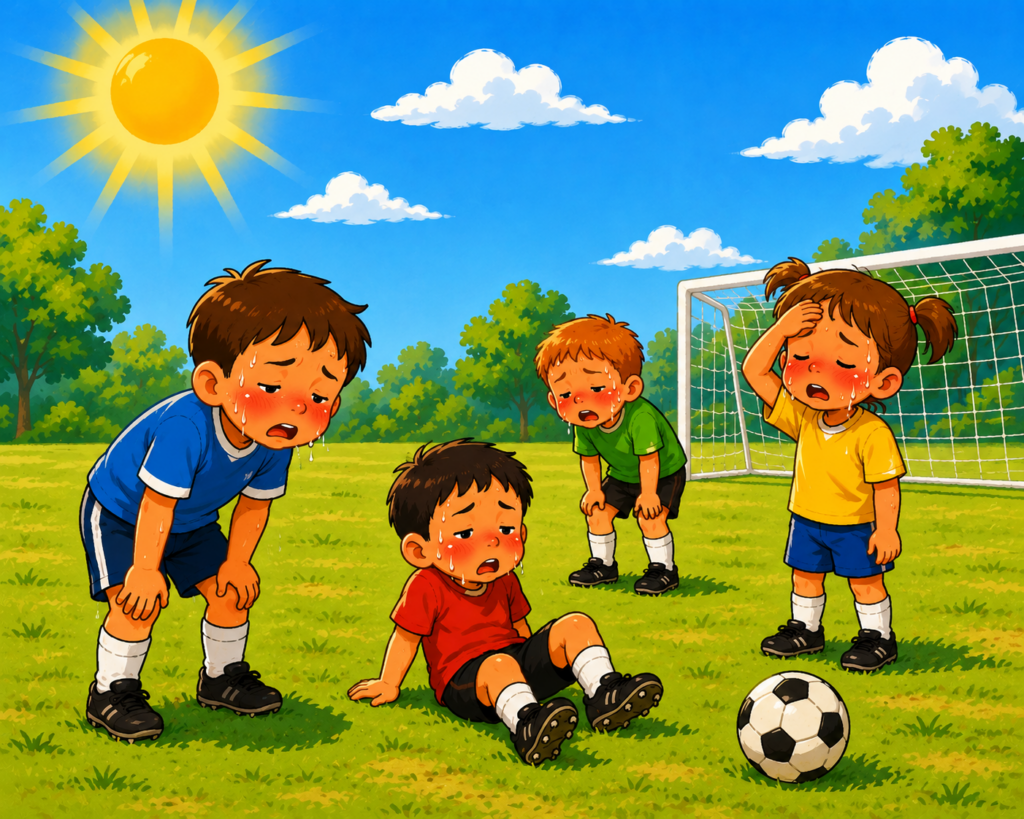
Research shows that children tend to move less, take less steps and have a higher heart rate during outdoor play in hotter weather (19). Overheating can produce similar symptoms to dehydration as well as accelerate dehydration itself.
For example:
Hot temperatures have also been shown to have negative effects on sleep quality (23) which in turn can mean children have less energy and enthusiasm for activities such as exercise.
As a result, developing cooling strategies to maximise physical activity participation during warm weather may be another simple but effective method for preventing an unhealthy level of sedentary time during the summer break.
Strategies could include:
Children’s motivation to play is much higher when they are around other children. Without a centralised location like school for kids to come together and play 5 days a week and the irregular holiday schedules summer brings, it can be harder to organise play and movement during the summer break. This can lead to children resorting to sedentary activity like screentime.
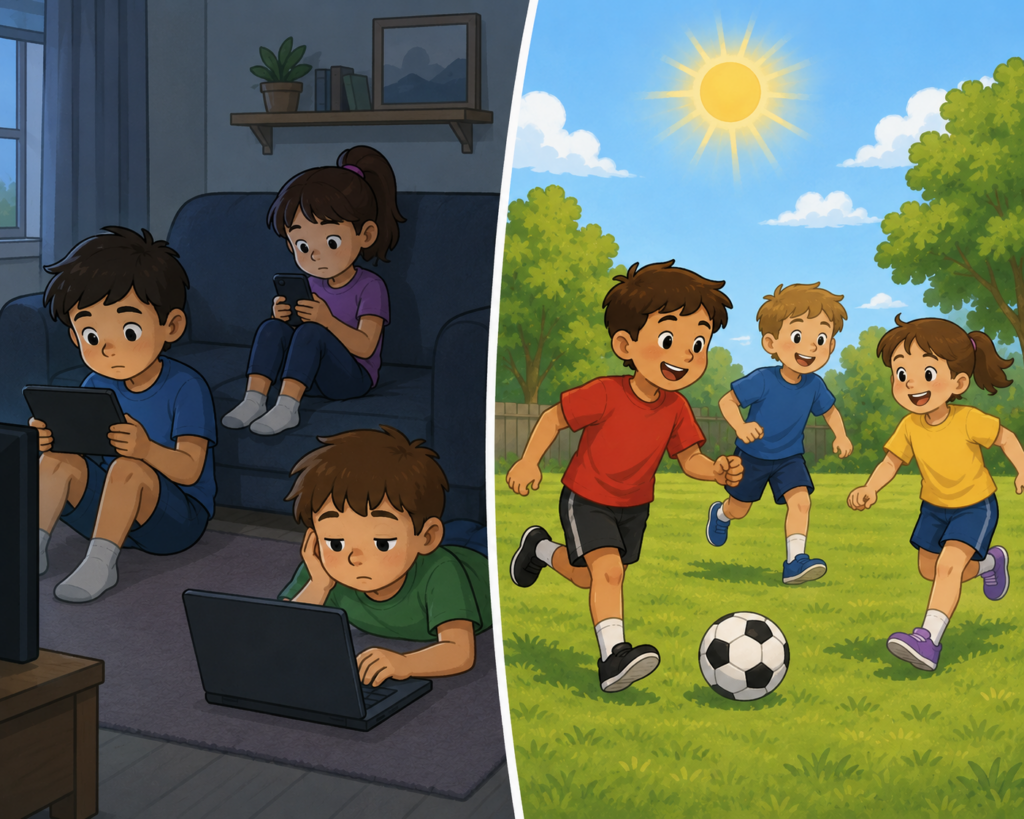
During term time, parents tend to enforce stricter limits on screen time to protect homework, sleep, and morning routines. Without these constraints during summer break children’s screen time on average has been shown in one study to increase by over 30 minutes per day and sedentary time by over 20 minutes per day (24). Over days and weeks, this extra time stacks up, leading to less physical fitness and decreased health (25).
Additionally the low effort, short term reward that screen time tends to provide can, over time, make the stimulation physical play, sports and activities offer feel underwhelming in comparison, reinforcing and increasing sedentary time further, while making it harder for children to find the same or much enjoyment at all in physical activity. While simply restricting screen time may seem like the solution, this approach can become counterproductive.
Control over screen time can be a source of conflict between parent and child if it is implemented without certain strategies. Additionally, solutions that may work in the short-term may make the problem worse in the long term, as forcing kids away from screens without their “buy-in” can have the psychological effect of making technology feel like a scarce and highly prized resource. Therefore careful consideration should be taken before establishing limits.
For example:
Sudden requests to turn off a device - Don't
While doing so may be reflexive, this kind of action can cause a defensive reaction from the child as the command feels arbitrary and a form of power struggle.
Create Clear Routine Boundaries - Do
For example: No screens before breakfast or after 8 P.M. gives the child some autonomy regarding their screen habits while protecting their brains during the most vital parts of the day. The reasoning can be clearly understood by the child creating a greater sense of “fairness”
Hide devices as a punishment - Don’t
At least as a first port of call or for unrelated misdemeanours (e.g. Not doing their chores). This focus on devices can further inflate their value, making them even more sought after.
Avoid devices being easily accessed - Do
When not in use, have devices (including your own) stored out of sight in an agreed location, ideally a cabinet where a child must ask for parental permission and can’t absent-mindedly grab and use it without any deliberate effort.
Take away devices with no alternative entertainment - Don’t
If the child doesn’t have a go-to activity before or after screen time they will often become bored and irritable, spending their free time thinking about screens.
Make non-screen activities easy access - Do
Keep toys, puzzles, art supplies, books or sports equipment in places where they will see and use them. Reducing the effort it takes to begin an activity will encourage them to engage more often. Even better, do an activity with them!
Organising camps, playdates, sports or days out will of course also keep them preoccupied.
Have completely different rulesets - Don’t
When a child sees an adult glued to their phone while being restricted from their own they will view the restrictions as hypocritical. At younger ages especially, children mimic adult behaviour.
Be a role model for screen use - Do
Leading by example and limiting your own screen time is one of the most persuasive methods. Not only is this more motivating for a child, it’s healthy for YOU. Less screen time may mean more time spent together bonding! Make it a challenge, practice what you preach.
References: